Monday, March 15, 2010

On Writing for Boys

I've somehow got myself a rep as a writer that appeals to boys. I find this pretty amusing, since I don't actually write for boys. I write for myself and I am, well, a girl. 

I'm fine with my testosterone-laden fans, though. We get on well, as we share a taste for fart jokes and squishy things like multi-legged bugs and inside-out eyelids. (Aside: We actually frightened another adult out of the room at The Flying Dragon last week when the boys' book club and I demonstrated zombie eyes - rolling your eyes back so only the whites show. If you can do that, BTW, you are probably very hypnotizable).
What I find funny-peculiar, however, is that  these topics have somehow come to be labelled as "for boys." I'm not a boy, and I like them. And there are plenty of girls out there who also like the rude, the crude, and decidedly grittier side of things. We gals are not all sugar and spice, you know. Forty+ years after the Women's Lib movement got its panties into gear (and burnt its bras), no one should need to be told this tidbit anymore.

But they do, still. Sexism may not be as obvious in North American life as it once was (just watch five minutes of Mad Men if you don't remember the "good" old days), but it's still there. Which brings me to the dilemma I have in being a "Writer for Boys:" How much should I cater to boys' inherent sexism when writing a boy book?

Exhibit A: My current book for Scholastic Canada: The Quiz Book for Boys. My name is presented on the cover in all its glory: H. Becker. Not "Helaine Becker" - girl's name. But "H. Becker" - genderless and therefore assumed-to-be-male name. This decision to go with the gender-free name irked me, I must admit. It seemed like giving in to sexism. But I want my book to sell. And boys can be dopey, we all know that.  Maybe some would put the book back on the shelf if they knew a woman had written it. And since a buck is a buck, we went with the plain unadorned H.

My proud female self is balking now, second-guessing that decision. Should I have made a stink, insisting we put my full name on the cover? Would it really have cut into sales?  Would Joanne Rowling's sales have suffered if she'd gone with her full given name instead of J.K.?

And what if it did? Was the cost in giving up our female identities worth it for a few dollars in book sales?

I have a niggling feeling that both Joanne Rowling and I pandered to male bigotry when we agreed to go with first initials only. We were modern day George Elliots, writing under aliases as men.

I'm not proud of it, but in the end, the name thing is pretty minor. The contents of my books is another story. I'm less likely to sacrifice truth or cater to boys' preferences if it means writing a book that strengthen's male sexism, if only by default.  That brings us to Exhibit B:  What's the Big Idea?

I had many heated discussions with editors about how to include women in the story of invention. The sad fact is there just aren't that many female-created inventions in the top 100. Nor are there many female inventors, great or otherwise,  that we know by name. In a book focusing on the history of inventions, how could we proceed without given half the population short shrift? It wasn't easy, let me tell you. We didn't want to be intellectually dishonest and put in women just for the sake of prettying the book up. Nor did we just want to leave us ladies out. After all, being kept out of the action was why there weren't any Leonardas or Galileas to write about!

The solution was to deal with the matter straight up. I explained to readers in a complete mini-essay just why women-inventors, like the ones who came up with the spinning wheel, the loom and the needle, didn't get recorded (guys took the credit for their innovations), and why, in the Industrial era, so few major inventors were women (sexism kept them out of the labs where scientists and technology geeks shouted Eureka!).

Next, Exhibit C: I'm writing another book sure to appeal to boys right now. It's The Hilarious History of Hockey.

In my research, I learned that women have been a huge part of hockey since the beginning of the sport in Canada. A 14-year-old girl named Isobel Stanley, for example, was even a major force behind a well-known championship prize (yes,the Stanley Cup, named for Izzy's daddy). She also played on one of the earliest known women's teams.

Good old Izzy, a genuine hockey pioneer and hero. But here's the honest-to-God truth:  most boys don't like to read about girls, any girls, even ones as impressive as Isobel Stanley. Statistics prove it. Guys tend to disdain girls' and women's activities from the get-go.

So here I am, trying to write a book that will appeal to boys who don't want to read about girls. Logic says I should just omit girls from the story. Or does it?

The trials and tribulations of the Spudettes are just as much a part of hockey history as are the ups and downs of the Canadiens. Both were discriminated against by the powers that be: the Canadiens  by the Anglo power-brokers, and the Spudettes by the male authorities.  Should I just tell half of the hockey story because boys are not as interested in the girly stuff? And  - bottom line - by leaving it out, will I sell more books? (Lord knows, I want to sell more books...)

To submit to that wish wouldn't be honest. It wouldn't be right. It would stick in my craw, as a woman, to leave us gals out. We've been left out enough in the history of hockey and everything else - should I allow myself and my (female) editors to do yet one more disservice to the (ha ha) gentler sex?

Nope - and that's why I am going to make sure as much of the history of the gals' game goes into The Hilarious History of  Hockey as is needed to give a fair and honest picture of the game. Even so, the girls' game will only garner about a tenth of the number of pages devoted to the boys' game.

That ten percent is important, though. Boys (and girls too!) who read this book need to know what happened in the past. When they read the very un-funny tales of blatant sexism, I'm hoping that they will recoil in shock and dismay. I hope they will realize that freedom and equality are always hard won, no matter where the battle is fought. And I also hope they will learn that even kids can make a difference in righting the wrongs of this world. After all, it was two ten-year-old girls, twenty-five years apart in time but identical in spirit,  who stood up for girls and women in Canada when everyone else just looked away. Abby Hoffman and Justine Blainey fought for, and eventually won,  the right for girls to play hockey just like the boys. They are every bit as great as Gretzky in the story of Canadian hockey.

I consider my mantle as "a writer popular with boys" as both an honor and a responsibility. I hope that my boy-readers enjoy what I write. I also hope that, as a consequence of reading my words, they will grow up with a healthier and fairer attitude to the fair sex than their predecessors.


Saturday, March 13, 2010

Blow Your Socks off Science Magic

While researching Magic Up Your Sleeve, I learned some fascinating info about physics, chemistry, and more. I thought I'd share some of the coolest ones with you here.

 Now You See Me, Now You Don’t - Hide and Seek Electrons


Are you over here? Or over there? It seems like a simple question, unless you happen to be an electron. These tiny parts of the atom have a mysterious, magical characteristic: you can measure where they are, or how fast they are going, but never at the same time! 

The Force is with you!

The universe relies on four seemingly magic forces to keep it together. One of the forces you’ll recognize is gravity. It’s the force that keeps you from flying off into the air. Another major force is the Electromagnetic force. It comes into play wherever atoms interact. The third major force is called the Weak force. Despite the name, it’s 10 million trillion trillion trillion times more powerful that gravity. It works on such a small scale, though – inside the atom – that you won’t ever feel it. Last but not least, there’s the Strong force. This is the force that holds the parts of an atom together.

The real magic numbers

If you were a nuclear physicist, you’d know that magic numbers really exist. They are 2, 8, 20, 28, 50, 82, and 126. These are how many protons or neutrons can be arranged in complete sets, or shells, inside the atom’s nucleus. Atoms with “double magic” have the magic number of both protons and neutrons.

What makes the magic numbers so, well, magical? It turns out that atoms with magic numbers are more stable than other atoms.


A totally cool trick of the light

Light tweezers have been invented by a biomedical engineer at Johns Hopkins University in Baltimore, Maryland. Scot Kuo uses light from a 10-watt laser to grab hold of cell parts. It can then be used to move single molecules inside cells. Kuo operates his optical tweezers using a joystick attached to a microscope. Since the tweezers can move tiny parts without touching them, it helps keep the cells from being contaminated by foreign matter or bacteria. 

Wednesday, March 10, 2010

7 Sneaky Ways Magicians Trick You

Magic up your Sleeve just hit the bookstores and of course I'm thrilled. Lots of sorcery (and hard work) went into creating a book that highlights the science concepts underlying many magic tricks.

For me, doing the research for this book was a crash course in psychology, neuroscience, physics and chemistry. Sure, I learned how to do some cosmic sleight of hand, but mostly, I learned about the brain.

Most magic tricks, I discovered, rely on 7 main techniques to achieve their effect. These techniques go beyond just quick hands and stagecraft. They are the true tools that enable those performance skills to work. Here they are:

  •  Optical misdirection

This is a biggy.

Let's try it right now. Look around the room in which you find yourself at this moment. Study the scene in front of you. Then close your eyes and try to describe everything that’s there. When you reopen your eyes, chances are you will not have omitted several objects, even though they are all in plain sight. That’s because most people really only pay attention to what their eyes are focusing on. For example, if you’re looking at a scrumptious slice of cake, you may perceive the table, the napkin, and the nearby vase of flowers, but you won’t see them.

Magicians take advantage of this natural tendency by directing your attention to a certain spot. While you focus on that spot, the magician is busy working the trick somewhere else.
  • Psychological misdirection
Your brain is wired so that it is always trying to anticipate what comes next. Why? If you can make a correct prediction, you will be able to respond appropriately.

Magicians intentionally mess with your ability to make accurate predictions. They build suspense to speed up your heart rate and get adrenalin flowing, factors that make it harder to think logically. They use very casual gestures to disguise the importance of a particular action, and tell stories that distract you from what’s really going on. They provide false explanations for events so that you wind up expecting the wrong outcome.
  • Optical Illusion
Yes, they do do it with mirrors. Magicians love to work tricks of the light, as well as any other trick that can take advantage of how human vision operates. Reflection, refraction, depth perception, ambiguous boundaries – all of these provide a wealth of opportunity for fooling the eye – and the eyes’ owners!

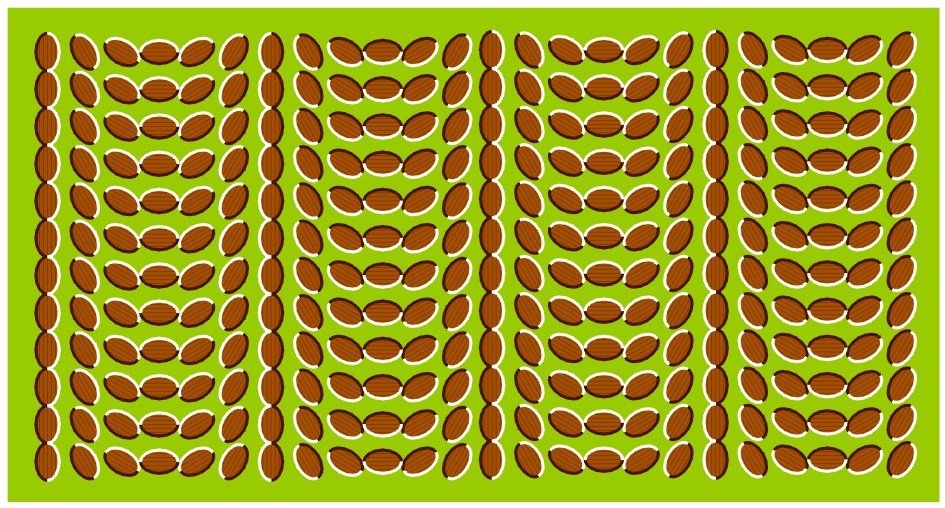
Scroll to the bottom of this post to see one of my all-time favorite optical illusions - the rippling curtain. If someone asks me nicely, I'll provide the explanation for how it works in a future post.
  • Cognitive Illusion
Magicians know that our brains don’t process information as quickly as it comes in. There’s always a tiny time lag. Magicians take advantage of this gap to make us think we see something that is no longer there, or to overlook something that is!
  • Chemistry
Mix two colorless potions together. Ka-boom! Is it magic, or a simple chemical reaction? Rest assured - the magician knows something about the chemical make-up of her ingredients that you don’t. She jerry-rigs the trick to make sure to get a dramatic, eye-catching effect from simple materials. I'm going to post a fantastic and easy chemistry trick in a future post for your "illumination."
  • Mathematics
You can bet on it: Stage magicians and mentalists are experts at math. Geometry, algebra, probability – magicians are A+ students of them all. They always know the odds, and use math tricks to make you think they know something they don’t, or hide what you know from yourself! Many mind-reading and card tricks rely on simple number patterns or probability to work (you’ll find quite a few in Magic Up Your Sleeve).
  • Physics
Electromagnetism, air pressure, thermodynamics, the nature of sound and light – all of these physical factors provide tools for the scientifically savvy stage performer.

My all time favorite magic effect comes from this category - but I couldn't include it in the book. Why? Because we wanted Magic Up Your Sleeve to be totally safe for even young kids, so anything that could have been remotely dangerous was set aside. We had so many tricks to choose from, it wasn't hard to find foolproof alternatives..except for this one. It relies on a light bulb and a woolly mitten and....

I'll post that one in a few days too. :)

Now:
Here's my fave optical trickery, the Rippling Curtain:

Sunday, March 7, 2010

The Orange County Women's Book Group: Literary Guild of Orange County's 17th Annual Festival of Women Authors

Check it out! The Literary Guild of Orange County's 17th Annual Festival of Women Authors is coming up on May 22nd. I'll be speaking, as will Kristin Hannah (Firefly Lane, True Colors, Winter Garden) Rhys Bowen (Constable Evan Evans series), Wendy Hornsby (Maggie MacGowan mysteries), Tania James (Atlas of Unknowns - debut fiction) Rhoda Janzen (Mennonite in the Little Black Dress - memoir), Julie Marie Myatt (The Happy Ones and other plays) Sandra Tsing Loh (Depth Takes a Holiday and other essays, also on NPR's KPCC.

Friday, March 5, 2010

I put my brain in a scanner for science today

I've been volunteering at the Rotman Research Institute as a subject for a variety of investigations into brain health and function. Last year, I participated in two studies addressing memory. The first just involved answering questions, and the second involved electrodes and goo and... messy and fun!

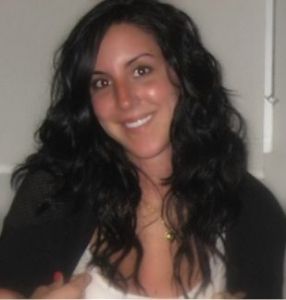
I went in for the a third study this afternoon, this one exploring emotion and memory.Not nearly as messy, but just as interesting. I was slid into an fMRI for about an hour while researcher Daniela Palombo (that's her picture below!)  gave me instructions through headphones.

Being in the fMRI was a very relaxing experience - womblike, with an accompanying "musical" soundtrack from the giant 3 Tesla magnets that could be titled "Atonal Concerto for Whale with Truck Horn." I know some people find being in the MRI machine claustrophobic, but the way I look at it, any chance you get to lie down during the afternoon is ok by me. (They even tuck you in with a little blankie!)

A mirror was affixed to the goalie-mask-like head stabilizer (your digital brain movie comes out fuzzy if you move) and enabled me to see a computer screen from my comfy cot. My left hand was fitted out with a heart-rate monitor and a sweat-o-meter; my right was affixed to a button pad on which I could enter either a 1 or a 2 for various responses. I also had a breathing monitor strapped around my middle (it felt like a cuddle from a toddler - not too tight or ickily sticky, though!) and they gave me an emergency squeeze horn if I got panicky. I didn't, but I squeezed the horn anyway just to see if it would sound like Harpo Marx's. It did. Then Daniela got panicky - since she forgot how to turn the darn thing off!

My task was to watch a series of three videos. TV in bed - just like home!

The first included scenes from a generic road trip. My instructions were to try and recall, in as vivid detail as possible, a road trip I'd taken about ten years ago. After the videos, I was supposed to declare how deeply immersed I had become in the memory - did it feel like I was reliving it? Or was it just flat, unemotional, with no bite? I recalled a trip to Virginia I'd taken with my family through the Blue Ridge mountains and Monticello. Pleasant, but not exciting. Not surprisingly, I didn't find my memories particularly vivid or long-lasting; I kept getting distracted by stupid stuff like, "how old is this video anyway? I haven't seen a car like that in years!"

A little break followed, in which I simply had to indicate whether a number flashed on the screen was odd or even. Then I watched a second series of videos.

These showed a traumatic, upsetting scene, one that received a great deal of media attention in the past. I did recall the event shown, and did indeed have a very vivid recollection of where I was at the time and how I had felt. I pressed my right finger several times to indicate an 8 out of 10 on the immersive experience- the videos brought me right back to how I felt at the time.

A second short break with the odds and evens followed, but this time it was actually a bit tricky. My mind kept drifting back to the troubling video, and I had a bit of trouble concentrating, even though the task was ridiculously simple. The power of memory and emotion, eh?

There was one more series of videos to view. These showed another traumatic event, but one of which I had no experience or recollection. I was instructed to imagine how I would have felt if I'd been there, and then describe how intense my experience of it was.

As a writer, with a pretty intense imagination, I was able to conjure up a pretty good false memory, one powerful enough to make my heart pound and tears spring to my eyes as I watched the video. I was suddenly conscious of the huge lump in my throat and how tense my body had become - I guess that's what they mean by "empathy."

The whole test took about an hour, and was essentially painless. I hope that my small contribution, though, will be of great value to the researchers, and help shed light on a problem that afflicts many people around the world. It turns out (Daniela filled me in after I was finished) that the study is looking at how the brain forms memories around traumatic events, and why some people who live through trauma develop Post Traumatic Stress Disorder and others don't. I was a "control" in this study, but some of the other participants had actually lived through the traumatic event I had been shown - and some of those people did indeed wind up developing PTSD.

I'll receive copies of my digital brain videos in about two weeks. I've asked Daniela to explain to me what they show - which areas are reacting most strongly at different points during the test, and what this says about my so-called normal brain. I'll keep you all posted about what the research uncovers about PTSD and the links between memory and emotion.

To see more about the research done at the Rotman Institute, check out their Media and News page. You can take a peek and see what's going on in all of the different labs too! Here are the details on one of the previous studies I volunteered for. And I know I'm kind of an idiot but I love the idea of the ERP Lab - even if their research is really cool and has nothing to do with Erping.

If you'd like to volunteer for a study (you need to live in the Toronto area and be available during the workday), you can contact Daniela Palombo directly. She'll be able to find a study that suits you to a T.

Last but not least, please consider supporting the important research done by the Institute. The Baycrest Foundation funds the Rotman Institute as well as other research on aging and geriatrics.

Thursday, March 4, 2010

The DIR Model and Autism - Does it Work?

Last week I had the opportunity to present, for the second time, at CasaBlanca Academy, a small, innovative school for children with autism in Hollywood, Florida.

It's not news that autism and Autism Spectrum Disorders have increased dramatically since the 1980s. The nagging question, though, is why. Genes certainly play a part, and so do environmental factors (but NOT vaccines!) But no one can point to a single factor, or even a cluster of triggers and say, "Aha! There we have it! Remove that and ASD will be eradicated!"

So while the hunt continues for the cause of ASD, parents, caregivers and educators on the ground are left to struggle with the effects. And those effects can be devastating.

Currently, the most popular method for working with children with autism is based on Applied Behavior Analysis (ABA), but recent questions about the ABA model sparked others to devise new ways of working with autistic kids. One of those is a relationship model, or Developmental, Individual-Difference, Relationship-based (DIR) method – a model founded by veteran infant development specialist and child psychiatrist Dr. Stanley Greenspan. It's based on the premise that an exchange of emotional signals forms the basis of learning in childhood. The method trains parents and teachers to engage the emotions of even the most withdrawn toddlers by getting down on the floor and entering the child's world. “Floortime,” as Dr. Greenspan calls it, helps turn repetitive acts – like lining up blocks -  into playful interactions.

CasaBlanca Academy follows the DIR approach as applied by Celebrate the Children, a New Jersey school that has achieved some impressive results. The school was featured in a 2006 article in TIME magazine (well worth reading!) that investigated new methods for teaching children with ASD. Monica Osgood, the director of CTC, serves as consultant to CasaBlanca Academy and has assisted the school in mentoring staff and implementing an innovative curriculum.

Jim Barrett and Stacey Coulter are two of the parents who founded CasaBlanca (they're also my old Duke college buddies). They did so when they were unable to find a program suitable for their son Liam anywhere in South Florida. In just 18 months since the school opened, they say, the school has made significant progress in reaching its goals.

One of the reason's for the school's success is the energetic and inspiring lead teacher, Jennie Trocchio. She says: “It is truly an honor to work at CasaBlanca Academy, a school that views each student as a unique individual with limitless capabilities. Every single day since the school’s opening in August of 2008, I have had the ultimate privilege to encourage and educate my students through meaningful activities that allow the children to build relationships and blossom before my eyes. CasaBlanca Academy is unlike any school I have ever experienced, and the results we have witnessed are unparalleled."


I can't say whether it's the DIR method itself or simply its fabulous teachers that makes CasaBlanca such a wonderful place to be. But that, assuredly, it is. During the too-short morning I spent at the school, I got the chance to participate in a dance session, lead story time,  observe math and language arts seat work, and get involved in role play.

What I enjoyed most of all , though, was the spontaneous hugs, the wide smiles and the peals of laughter that rang throughout the classroom. This was a joyous, happy place, despite the very real issues being dealt with every day. I can't wait to back and visit again!


ADDENDUM: In doing the research for this blogpost, I was pleased and surprised to discover that some of the current scientific research exploring the DIR approach is being conducted right here in my home town of Toronto, at York University. The Mission Statement for York's Milton & Ethel Harris Research Initiative (MEHRI), which is conducting this and other studies into "the evolution of symbols, language and intelligence," makes for illuminating reading.

**

Wednesday, March 3, 2010

Meet Ron Lightburn, Award-winning Illustrator #fb

I was so pleased to learn last week that Ron Lightburn has been selected to illustrate my 2011 picture book, Juba This Juba That, from Tundra Books. Ron is a Nova Scotian with a great track record for producing beautiful children's books, including the touching book by my West Coast chum, Sheryl McFarlane, Waiting for the Whales.  I know he's going to do a splendid job with my own story adapted from an old slave work chant.

Kathryn Cole, who is my editor at Tundra for Juba, was actually my editor for my very first picture book - Mama Likes To Mambo back in 2001. It's so great to have the chance to work with her again!
The junior editor on Mambo, way back when, was the lovely Jennifer MacKinnon. Jen moved on from that post to become Editrix Extraordinaire at Scholastic Canada. After a concerted pestering effort on my part, she signed me up for The Looney Bay All-Stars series, two picture books, two quiz books and my current project, The Hilarious History of Hockey. Yes, I owe Jen BIG. 

It just goes to show you what a small world publishing can be, and how it's made up of great people who become great friends. How lucky I have been to be a part of it!

I'm now looking forward to getting to know Ron -- not just through his art, but personally too! He comes highly recommended as a great guy by mutual friends like kidlit writer Debbie Spring.

To a successful collaboration, Ron!


Because: Science!