Showing posts with label education. Show all posts

Tuesday, January 3, 2017

Coming soon to a bookshelf near you!!

My latest picture book, You Can Read, will be published by Orca later this month. You can preorder it now at your fave indy bookstore (I'm partial to The Bookkeeper, Mable's Fables, Blue Heron Books and Ella Minnow, among others). It celebrates both literacy and life, and is a very funny. ;)

I'll be signing copies at the Ontario Library Association Superconference at the Orca Booth on Thursday, Feb 2. Come by, say hi, and get a book!

Wednesday, January 20, 2016

What's New in Science Trade Books for Kids - Join Me at OLA!


If you'll be in Toronto, next Wednesday, please join Gillian O'Reilly and Jan Thornhill  and me bright and early as we present an informative and fun session (There will be giveaways!) at the OLA Superconference. 

Here are the deets:  


When: Wednesday, Jan 27 | 9:00 am - 10:30 am
Location: MTCC 206C
Days: Wednesday. Event Types: Session. Sectors: School Libraries. Subjects: Children's Resources and STEM.

Description:
Nonfiction for children, that under-appreciated workhorse of the literary world, is currently undergoing a Renaissance. Print resources, especially in STEM fields of Science, Technology, Engineering and Math, are more innovative – and useful – than ever. Did you know, for example, that breaking news in science frequently appears first in children’s books? Canadian authors are at the leading edge of the trend, producing ground-breaking, award-winning books that turn fact-finding into an adventure, and stimulate critical thinking skills with first-rate scholarship. In this session, we will shine white-hot laser beams on contemporary trends, explore how to evaluate science-related children’s books and determine how to highlight them in your collection. You’ll also receive a hot-off-the-press annotated list of science-related books by Canadian authors, keyed to curricular topics. This session will be led by the bloggers at http://sci-why.blogspot.ca/  where you can find the latest news related to science issues for children in Canada. PLUS: FREE BOOK DRAW!
Learning Outcomes
Learn about game-changing contemporary trends in children’s nonfiction, especially in the areas of science, technology, engineering and mathematics STEM
Learn techniques for evaluating the new style of print nonfiction for children, especially in the areas of science, technology, engineering and mathematics STEM
Receive a detailed, comprehensive list of Canadian science books for children, keyed by curricular topic, and links to on-line resources to make selecting science resources for children faster, easier, and more reliable.

Friday, September 27, 2013

Lane Anderson Science Writing Awards Announced!


Can you be just a little over the moon? No. Which is why I'm a LOT over the moon to have been named the winner of the 2012 Lane Anderson Award for Science Writing, in the Children's Books category for The Big Green Book of the Big Blue Sea.


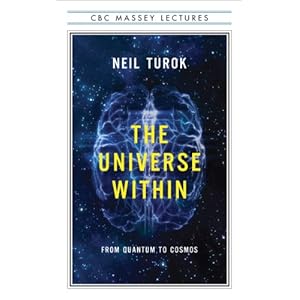
The winner in the Adult category is Neil Turok for The Universe Within.


Congrats to Neil and to everyone who participated in this great event! And a huge thanks to the Fitzhenry Family for endowing this award and highlighting the central role of science in our lives.

Here are the deets from the official announcement:

$10,000 Lane Anderson Award Winners

Celebrating the Best Science Writing in Canada

Toronto. 26th September, 2013:  The Fitzhenry Family Foundation announced the winners of the 2012 Lane Anderson Award. Finalists and winners were feted at an intimate dinner in Toronto.

The annual Lane Anderson Award, now in its fourth year, honours excellence in Canadian science writing, by highlighting two jury-selected books – one addressed to adult readers, the other written for children and/or middle grade readers.  Authors of the winning books each receive $10,000. 

There were a total of 20 submissions for this year’s award.

“We established this award because we believe passionately that science writing, and science reporting is vitally important for every Canadian today.  Science writing, research, and knowledge impacts the ways in which we live now, the ways our children will live in future, and the ways in which our children’s children will live their lives. As Canadians, we do not pay enough attention to science. We take it for granted.  The Lane Anderson Award is dedicated towards removing that indifference, two books at a time. We thank all of the authors and publishers and judges who are helping us pass along this message. It needs to be heard and heeded.”
- Hollister Doll & Sharon Fitzhenry Directors, Fitzhenry Family Foundation  

The annual Lane Anderson Award honours two jury-selected books, in the categories of adult and young reader, published in the field of science, and written by a Canadian. The winner in each category receives $10,000.


The 2012 Lane Anderson Prize Winners are:

The Universe Within by Neil Turok (Anansi)

The most anticipated nonfiction book of the season, this year's Massey Lectures is a visionary look at the way the human mind can shape the future.  Neil Turok is one of the world’s top physicists and founder of the African Institute for Mathematical Sciences (AIMS). He is currently the Director of the Perimeter Institute for Theoretical Physics.


Big Green Book of the Big Blue Sea by Helaine Becker (Kids Can Press)

Based on the idea that knowledge is power, The Big Green Book of the Big Blue Sea shows how the ocean works and why this immense ecosystem needs our protection. Experiments using everyday materials help explain the scientific concepts. Helaine Becker is a bestselling writer of children’s fiction, nonfiction and verse.


The two juries meet annually to consider all the submissions to the Lane Anderson Award and comprise editors, librarians, and previous Lane Anderson winners.

The Lane Anderson designation honours the maiden names of Robert Fitzhenry’s mother, Margaret Lane, and his wife, Hilda Anderson Fitzhenry.  The Fitzhenry Family Foundation is a privately directed Canadian foundation established in 1987 by Canadian publisher Robert I. Fitzhenry (1918-2008).  The Lane Anderson Award is administered by Christopher Alam, a partner at the law firm of Gowling Lafleur Henderson LLP.


Debby de Groot
647.295.2970
MDG_logo_signature

Wednesday, September 25, 2013

Four Stars for Little Jack Horner!


Just like the cow, I'm over the moon about this four-star review of Little Jack Horner, Live from the Corner.


It's from CM Magazine and says, in part, " Little Jack Horner Live from the Corner is a fresh and wonderful attempt to modernize old nursery rhymes and is a must-have for all children’s collections."

Read the full review here. Then go buy the book at your favorite indy bookseller!

Tuesday, April 23, 2013

The Big Green Book of the Big Blue Sea Wins the Outstanding Youth Award!


I'm so thrilled that my book about the ocean won this fabulous award from the Canadian Science Writers Association so close to Earth Day.


Here's the Press Release. Congrats to Jay Ingram, who won the Adult Book award, and to all the others on the shortlist. I was told it was a very tough call, as all of the books are terrific. I must say I agree, so feel very lucky indeed.

The Canadian Science Writers’ Association offers two $1000 annual book awards to honour outstanding contributions to science writing 1) intended for and available to children/middle grades ages 8-12 years, and 2) intended for and available to the general public for books that were published in Canada during the 2012 calendar year.


The general audience book winner is Fatal Flaws by Jay Ingram. The youth book winner is The Big Green Book about the Big Blue Sea by Helaine Becker. Entries were judged on the basis of initiative, originality, scientific accuracy, clarity of interpretation and value in promoting a better understanding of science by the public.

The judges appreciated the way Jay Ingram brought excellent plain language story telling to an exceedingly complex topic in Fatal Flaws.

“The structure drove me forward as a reader. Good use of verbal imagery.”

Another judge said, “This book is well written and does not require a scientific background. The flow is good. The book provides a great overview of the status of prion diseases and does not fall into sensationalism.”

Clarity and the ability to engage the audience with a complex topic were also important factors when the judges considered The Big Green Book about the Big Blue Sea by Helaine Becker.

One judge commented that it is, “Clearly written with lots of information and discuses topics about the ocean and what happens in oceans. Well thought out, activities are good and relate well to the content being presented. Great use of experiments and observation. A good book for younger kids.”

The younger judges from grades 4 and 6 agreed, “I liked this book because it had many interesting experiments. I even did one myself.” “I really liked the experiments and it was very informative.”

The winners will be presented with their awards during the CSWA annual conference in Montreal at the gala and awards banquet on June 7.

Friday, April 19, 2013

Information Book Award Shortlist includes the Big Blue Sea...

The Vancouver Children's Roundtable released their longlist for Information Book Awards for 2013.

The link is http://vclr.ca/wp-content/uploads/2010/10/2013-Info-Book-Award-Preliminary-List.pdf

I'm delighted to announce my own book, The Big Green Book of the Big Blue Sea has made the first cut!

Thursday, April 18, 2013

Why Information Should Not Be - Cannot Be - Free


The National Post printed an article early this week about the ongoing battle regarding copyright and what constitutes 'fair usage" in Canada. Universities, such as York, no longer feel they need to pay writers for work used for "educational purposes." I'm wondering if  Michael Geist, the law professor at the University of Ottawa quoted in the article, would like to donate his teaching time since it's also for "educational purposes?"

This (only partly) facetious comment brings us to the crux of the matter.

Access Copyright is a collective of publishers and writers (and yes, I am an affiliate) - real people, not Borg or ants or government functionaries. The organization  manages licensing for reproduction rights to our work, and provides an important source of revenue for us. But Access Copyright has been forced into a corner. We don't want to sue universities. We love universities, and elementary schools, and libraries - all the public institutions that we rely on to keep us all educated.

But we writers simply can't afford to create work that we will not be paid for. Nor should we be asked to do so. If Professor "Information Must Be Free" won't pay for the use of our work, we will not make it available to him or anyone else.

This is already the sad case in Canada. Our children's publishing industry, which is vibrant and productive and brings tons of money into our economy, is threatened not only by the digital revolution and globalization, but by people who don't understand that writers are not public servants. We are entrepeneurs. We only make money when our books and articles are SOLD. And then, we earn only a fraction of the cover price of a book as royalties.

Schools and libraries are a big part of our business, especially for those of us who write mainly for children. Access Copyright and its licensing arrangements were set up to correct the imbalance that happens when single books are purchased by institutions who then photocopy them for entire classrooms, year after year. Licensing fees recognize the inherent value of our work, and the fact that reproduction technology robs us of legitimate income. 

But what happens if institutions decide not  to pay us for fair use of our materials? Then that market effectively evaporates - poof!

When a market disappears, so does the rationale for producing goods and services for it. Would Gilette produce razors for hairless people? No. Would coffee shops exist if no one liked caffeine? No. So how many Canadian writers and publishers do you think will produce books for Canadian schools and libraries if we can't get paid for them?

How about a big fat zero?

That's already what's happening. There's been a "chill" on Canadian subjects for kids books for the last few years as uncertainty about revenue simmers.

In the meantime, writers like me start focusing on topics we can sell internationally, where we can sell both more print and digital copies of our works. This may one day to turn out to be a boon for me - perhaps I'll wind up selling even more books overall. But it won't be so hot for Canadians, especially Canadian school kids, parents and teachers. What books will students learn Canadian history from? What sources will tell them about great Canadians? What stories will they see themselves reflected in?

None. If Access Copyright loses its legal and moral rights to collect money for my works from users, I'll be writing books set in "Chicago," not Toronto. And writing biographies of American heroes, American history, American scientific advances.

So to those who think this issue is a cash grab by a faceless corporate or government entity, think again. You're taking money from educators whose role is just as important as the teacher who uses our books, articles, etc. in the classroom. Most of us aren't rich. Taking away our livelihood does not help taxpayers, it justs shifts the expense to the welfare rolls, - a less fair, less efficient, and certainly less intelligent model than paying us for our work is.

To read the article in the Post, click here. You'll see my comment there too (a slight variation of the letter that appeared in the print edition of the Post this morning).

Please put your own comments on the Post site so our voices are heard!


Thursday, April 12, 2012

Parents' Choice Award for Planet Echo!

For the last few years, I've been writing the Dr. Greenie's Mad Lab segments for the TV show, Planet Echo. I just learned today that the show received a Parents' Choice Award for season 1.


From the Parents' Choice website:

"The program is recommended for kids aged 8 to 12, and though some of the skits are a little corny, the factoids are fascinating and there's a nice blend of hard science and light-hearted humor to keep kids' attention. The program includes frequent tags directing viewers to the companion website for more activities and information, and many show segments are available for viewing on demand.
For a universal message about doing your part to help save the planet, and an interesting glimpse into Aboriginal history and culture in Canada, Planet Echo is an earnest half-hour offering up positive suggestions kids can understand and put into practice in their own lives."

All I can say is wait til the folks at Parents' Choice see seasons 2 and 3!

Wednesday, December 14, 2011

Is Reading Fun?

Is reading fun? As a confirmed bookworm, I can reply with only one answer - of course it is. But that's not true for everyone - especially today's kids.  Even while literacy scores have been improving, we've managed to create a new generation of non-readers. According to an article in this week's National Post, fewer kids today report that they enjoy reading than they did a decade ago, despite an overall increase in literacy. 

My ultra-articulate response to this story is, "No duh." For at least the last decade, it's been obvious to those of us who care about literacy and reading that literacy education has been hijacked by the bureaucrats - functionaries who see the ability to read strictly as a job skill useful for future worker bees. Their view is that kids need to be taught to read - to decode written symbols - in order to produce valuable output - data entry, form-filling, ticking off of boxes on a customer satisfaction survey. The practical skill called literacy is completely divorced from what I would call true literacy - the ability to gather information from written sources of all kinds as a way to independently satisfy any curiosity.


In the reading-as-job-skill world view, reading for pleasure is beside the point, a distraction that interferes with measurable outcomes. So teacher-librarians, who spend their day encouraging kids to waste their time  - and tax payers' dollars  - giggling over books instead of building those black and white test scores, become redundant. And those expensive obsolete print collections called school libraries?  Frills. Let's put in a computer lab instead and call our job done. 

That has to be the thinking. Otherwise, how could politicians and educators spout the importance of literacy ad nauseum  while simultaneously gutting school libraries and eliminating school librarians?


With this week's news story, at last, the other shoe drops. Because of course you can't separate the love of reading from true literacy, any more than you can separate melody from music appreciation. There needs to be a reason to read, one that is meaningful to the reader, and not the bureaucrat, to drive true literacy. That reason comes when one discovers for one's self how books - and comics and magazines and DVDs -  open the world in unexpected ways, and how they can take you on a unique and highly personal journey.

Let's hope this new study gets the pendulum swinging back in the right direction. Let's put literacy education back into the hands of book lovers, people who revere the written world and respect children enough to let them come to the love of reading the only way possible - through old-fashioned discovery. And let's support - by funding AND through an appreciation of the critical role they play - the teacher-librarians in our schools.

They are the beating heart at the centre of any truly literate school community.

Because: Science!