Showing posts with label writing. Show all posts

Monday, November 14, 2016

Packaging Your Imagination is THIS WEEKEND!

null


Come to Toronto - yes, it's worth the trip  - to get the lowdown on everything kidlit!

I'll be speaking on Nonfiction:

Non-Fiction Truths: How to Plan, Pitch and Promote Your Nonfiction Project

Writing successful nonfiction requires plenty of research - and that's even before you begin the project! In this hard-nosed, nuts-and-bolts session, you'll get a step-by-step guide to how to take your idea from "Should I?"  to Sold. Learn how to Evaluate and Structure Your Idea, Do an Effective Market Comparison, Create a Clear, Complete  Proposal and Craft a Winning Cover Letter. Plus an up-to-the-minute look at the contemporary nonfiction market and how to target and evaluate potential customers, both in Canada and the US.


There are lots of other great speakers!!! I can't wait to sit in on all their sessions. For deets and registration info, go to Packaging Your Imagination.

See ya there!

Friday, September 27, 2013

Lane Anderson Science Writing Awards Announced!


Can you be just a little over the moon? No. Which is why I'm a LOT over the moon to have been named the winner of the 2012 Lane Anderson Award for Science Writing, in the Children's Books category for The Big Green Book of the Big Blue Sea.


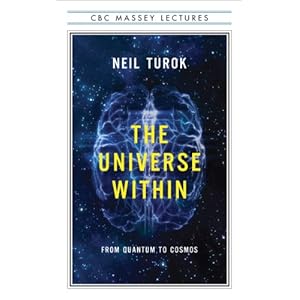
The winner in the Adult category is Neil Turok for The Universe Within.


Congrats to Neil and to everyone who participated in this great event! And a huge thanks to the Fitzhenry Family for endowing this award and highlighting the central role of science in our lives.

Here are the deets from the official announcement:

$10,000 Lane Anderson Award Winners

Celebrating the Best Science Writing in Canada

Toronto. 26th September, 2013:  The Fitzhenry Family Foundation announced the winners of the 2012 Lane Anderson Award. Finalists and winners were feted at an intimate dinner in Toronto.

The annual Lane Anderson Award, now in its fourth year, honours excellence in Canadian science writing, by highlighting two jury-selected books – one addressed to adult readers, the other written for children and/or middle grade readers.  Authors of the winning books each receive $10,000. 

There were a total of 20 submissions for this year’s award.

“We established this award because we believe passionately that science writing, and science reporting is vitally important for every Canadian today.  Science writing, research, and knowledge impacts the ways in which we live now, the ways our children will live in future, and the ways in which our children’s children will live their lives. As Canadians, we do not pay enough attention to science. We take it for granted.  The Lane Anderson Award is dedicated towards removing that indifference, two books at a time. We thank all of the authors and publishers and judges who are helping us pass along this message. It needs to be heard and heeded.”
- Hollister Doll & Sharon Fitzhenry Directors, Fitzhenry Family Foundation  

The annual Lane Anderson Award honours two jury-selected books, in the categories of adult and young reader, published in the field of science, and written by a Canadian. The winner in each category receives $10,000.


The 2012 Lane Anderson Prize Winners are:

The Universe Within by Neil Turok (Anansi)

The most anticipated nonfiction book of the season, this year's Massey Lectures is a visionary look at the way the human mind can shape the future.  Neil Turok is one of the world’s top physicists and founder of the African Institute for Mathematical Sciences (AIMS). He is currently the Director of the Perimeter Institute for Theoretical Physics.


Big Green Book of the Big Blue Sea by Helaine Becker (Kids Can Press)

Based on the idea that knowledge is power, The Big Green Book of the Big Blue Sea shows how the ocean works and why this immense ecosystem needs our protection. Experiments using everyday materials help explain the scientific concepts. Helaine Becker is a bestselling writer of children’s fiction, nonfiction and verse.


The two juries meet annually to consider all the submissions to the Lane Anderson Award and comprise editors, librarians, and previous Lane Anderson winners.

The Lane Anderson designation honours the maiden names of Robert Fitzhenry’s mother, Margaret Lane, and his wife, Hilda Anderson Fitzhenry.  The Fitzhenry Family Foundation is a privately directed Canadian foundation established in 1987 by Canadian publisher Robert I. Fitzhenry (1918-2008).  The Lane Anderson Award is administered by Christopher Alam, a partner at the law firm of Gowling Lafleur Henderson LLP.


Debby de Groot
647.295.2970
MDG_logo_signature

Tuesday, September 3, 2013

It's Official!

This is Chloe.
It's official - signed, sealed and in the mail - so now I can share my terrific news.

I'm thrilled to announce that from here on in I will be represented by Chloe Walker and Nick Ellison, from the Nicholas Ellison Agency,
an independent, boutique agency that's under the umbrella of the fabulous Greenburger Associates

This is Nick.

Nick and Chloe treated me to every writer's dream-come-true day last month, when we enjoyed a wonderful three-hour lunch getting to know each other. Now we're hard at working polishing up some brand new book project proposals, for subbing later this fall.

And this is me, demo'ing how I feel right now. :)


Friday, April 26, 2013

Why Information Cannot Be Free, Part II


Earlier this month  an article appeared in the main section of the National Post about Access Copyright's fight for Canadian writers. The organization is fighting on our behalf to maintain our compensation for our work that is photocopied by institutions such as schools and library.

The letters in response to the original article were full of vitriol. They made writers out to be blood-sucking fiends who scam students with our outrageous demands to be paid for our work. But what is the alternative? Government handouts? Then we'd be parasites draining the government teat. So we can't charge for our services, but we can't get government support either. Damned if we do, damned if we don't.

It's a lovely utopian idea, this "information should be free" trope. In an ideal world, it would be. So should health care. And public transit. And gardening services. What about food? Yeah, I'd like that to be free too, especially caviar and truffles.

But no one really expects these goods and services gratis, do they? Yet writers' work - that should be free for the taking. We should write as a public service. From the goodness of our hearts.

I'm not quite clear on why writers come in for such misunderstanding and ire. Do people think writing isn't a "real job?" My mother-in-law might think so, because I drink a lot of coffee in my pajamas. But I work 90 hours a week, with no guaranteed income - no salary, no pension, no benefits. Words are not rain that fall from the sky. They take effort to produce, and time, and expertise. Yes - expertise.

Maybe our critics believe writing is something that anyone who can clutch a pencil can do. Yeah! Maybe that's it! They resent that we have actually sat down and done something so "easy" they haven't bothered to get around to that novel yet themselves. Or they don't recognize their own 'work,' ahem, needs a major edit and rewrite.

Or is it fear? That writers are intellectual and creative elites that wield magic they don't understand? I confess: I kind of like that idea, if not the fallout from it.

Writers are not corporate entities with huge coffers. We are not governments with enormous powers. We are not the 1% - most of us aren't, anyway. We are working stiffs, trying to get by just like retail clerks, machinists, and teachers.

The left should support us because we are workers exploited by big corporations. Shall we talk about the Big Six in publishing for a moment?

The right should support us because we are entrepeneurs who create jobs and bring wealth into our country. I've been self-employed for more than 20-odd years, have hired tons of people, and paid taxes the whole way through. Isn't this a good thing for Canada?

Clearly, society values our work. If it didn't, why would professors want to photocopy our words? Wouldn't they just write their own teaching materials?  Good content does find an audience. It should follow, then, that we are able to charge for it, just like video game producers do. Just like you, gentle reader, probably charge for your own contributive labour.

I've attached my second letter to the Post below. It was in reply to another letter, the gist of which will be self-evident.

Please write  to Letters@NationalPost.com to keep this story alive and get our plight back into the main pages. And consider contacting other media outlets as well. We need to tell our side of the story, even if that means stopping work for a moment - paying work - to do so.

---Helaine, blogging for free


"In his letter of April 25, James Homuth says, "for every author who insists they need an Access Copyright equivalent to get paid, there are at least two that can do without it." Can he please provide his data for this statistic?


He also says, "Make the content worthwhile, and you'll get paid." I'd like to see his business plan for this too. How, exactly, does Homuth think that magic happens? E-books on average pay far less than print. Magazine article revenue has stagnated for 15 years; rates for on-line articles are pitiful or nonexistent. Blogging? Not profitable, and problematical if you don't want weight-loss ads beside your posts. Self-publishing? The infamous "long tail" only works if you live as long as Methuselah - that's "if-come," not income.

The publishing business is changing at an unprecedented rate. True, writers do need to figure out new ways to make a living from our words. But "build it and they will come" doesn't work for books any more than it does for baseball parks. I'd be happy to sit down with Mr. Homuth and your own Post columnists to provide a clearer picture of how self-employed writers actually put bread on the table."



Thursday, April 18, 2013

Why Information Should Not Be - Cannot Be - Free


The National Post printed an article early this week about the ongoing battle regarding copyright and what constitutes 'fair usage" in Canada. Universities, such as York, no longer feel they need to pay writers for work used for "educational purposes." I'm wondering if  Michael Geist, the law professor at the University of Ottawa quoted in the article, would like to donate his teaching time since it's also for "educational purposes?"

This (only partly) facetious comment brings us to the crux of the matter.

Access Copyright is a collective of publishers and writers (and yes, I am an affiliate) - real people, not Borg or ants or government functionaries. The organization  manages licensing for reproduction rights to our work, and provides an important source of revenue for us. But Access Copyright has been forced into a corner. We don't want to sue universities. We love universities, and elementary schools, and libraries - all the public institutions that we rely on to keep us all educated.

But we writers simply can't afford to create work that we will not be paid for. Nor should we be asked to do so. If Professor "Information Must Be Free" won't pay for the use of our work, we will not make it available to him or anyone else.

This is already the sad case in Canada. Our children's publishing industry, which is vibrant and productive and brings tons of money into our economy, is threatened not only by the digital revolution and globalization, but by people who don't understand that writers are not public servants. We are entrepeneurs. We only make money when our books and articles are SOLD. And then, we earn only a fraction of the cover price of a book as royalties.

Schools and libraries are a big part of our business, especially for those of us who write mainly for children. Access Copyright and its licensing arrangements were set up to correct the imbalance that happens when single books are purchased by institutions who then photocopy them for entire classrooms, year after year. Licensing fees recognize the inherent value of our work, and the fact that reproduction technology robs us of legitimate income. 

But what happens if institutions decide not  to pay us for fair use of our materials? Then that market effectively evaporates - poof!

When a market disappears, so does the rationale for producing goods and services for it. Would Gilette produce razors for hairless people? No. Would coffee shops exist if no one liked caffeine? No. So how many Canadian writers and publishers do you think will produce books for Canadian schools and libraries if we can't get paid for them?

How about a big fat zero?

That's already what's happening. There's been a "chill" on Canadian subjects for kids books for the last few years as uncertainty about revenue simmers.

In the meantime, writers like me start focusing on topics we can sell internationally, where we can sell both more print and digital copies of our works. This may one day to turn out to be a boon for me - perhaps I'll wind up selling even more books overall. But it won't be so hot for Canadians, especially Canadian school kids, parents and teachers. What books will students learn Canadian history from? What sources will tell them about great Canadians? What stories will they see themselves reflected in?

None. If Access Copyright loses its legal and moral rights to collect money for my works from users, I'll be writing books set in "Chicago," not Toronto. And writing biographies of American heroes, American history, American scientific advances.

So to those who think this issue is a cash grab by a faceless corporate or government entity, think again. You're taking money from educators whose role is just as important as the teacher who uses our books, articles, etc. in the classroom. Most of us aren't rich. Taking away our livelihood does not help taxpayers, it justs shifts the expense to the welfare rolls, - a less fair, less efficient, and certainly less intelligent model than paying us for our work is.

To read the article in the Post, click here. You'll see my comment there too (a slight variation of the letter that appeared in the print edition of the Post this morning).

Please put your own comments on the Post site so our voices are heard!


Monday, September 24, 2012

Attention Young Writers!


Do you know someone of tender years who already has the writing bug and is looking for a place to get their work published?

Check out this list, compiled by the fabulous Gillian O'Reilly,children’s book author and editor of Canadian Children’s Book News for the Telling Tales Festival in Hamilton, Ontario. Gillian has very kindly allowed me to reprint her listings here.


MARKETS FOR YOUNG WRITERS


* Check for local papers and contests in your area.
* Canadian Aboriginal Writing Challenge www.our-story.ca
* Claremont Review - an international print magazine, based in British Columbia, that accepts manuscripts by writers 13-19. www.theclaremontreview.ca
* CNIB Braille Writing Contest www.cnib.ca/en/services/library  and click on Braille Creative Writing Contest.
* Cicada Magazine - an international print and online magazine that publishes writing by teens. www.cicadamag.com
* Cricket Magazine - an international print magazine that holds monthly writing and artwork contests for young subscribers 9-14. www.cricketmagkids.com
* The Cyberkids.com website accepts work for online publication. www.cyberkids.com
* Hamilton Public Library annual Power of the Pen contest, poetry and short fiction, for ages 12-18. Look for it in the spring. Check the Teen Page at www.hpl.ca
* KIdsWWwrite - e-zine for young authors and readers, published by the Department of English at Okanagan College. www.kalwriters.com/kidswwwrite
* New Moon: The Magazine for Girls and Their Dreams - a print magazine edited by 8 to 14 year-old girls. www.newmoon.org
* Skipping Stones - an international print magazine that accepts manuscripts by writers 8-16. www.SkippingStones.org
* Stone Soup - a print magazine of writing by young people from 8-13. www.stonesoup.com
* Toronto Public Library Young Voices Magazine and other venues for writing and art: http://ramp.torontopubliclibrary.ca/
* Windscript, the Saskatchewan Writers Guild's e-zine of high school writing http://www.skwriter.com   (click on “publications” and then on “Windscript”)
* Check out summer writing camps for kids, including the Brantford Camp run by Kids Can Fly (http://kidscanfly.ca/) and the Burlington Book Camp (http://www.bpl.on.ca/book_camp)


Because: Science!