Friday, October 21, 2011

The Power of Children's Literature

Last night, I had the great pleasure of hearing Art Slade speak at the Lillian Smith Library in Toronto. His talk was entitled From Hobbits to HTML, and focused on the ever-changing world of digital publishing.

Art began his talk by describing some of the books that had influenced him when he was a child. At the top of his list was Tolkien's The Hobbit, and the Chronicles of Prydain, by Lloyd Alexander. Art said he'd read both of these in fourth grade, and they changed his life.
 Now Art and I had very little in common during our childhoods. He was raised on a ranch in Saskatchewan. I'm a New York native. He was a boy; I was a girl. But we did share one thing.

I, like Art, read The Hobbit and the Chronicles of Prydain when I was in 4th grade. And the books made a huge impression on me too.

Thousands of miles apart in space, and worlds away in terms of experience, both young Art and young Helaine were moved, inspired and changed by reading those same books. What does this small fact tell you about the power of literature, and the importance of reading for children, then and now?

Me, the summer I read The Hobbit. I was so taken with the book that I faked sick
and read the book in the motel as
the rest of my family explored the Grand Canyon.

Thursday, October 20, 2011

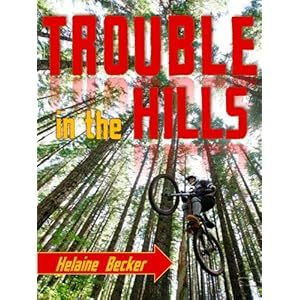
Trouble in the Hills Launch!

Trouble in the Hills Launch!

Time Sunday, November 6 • 2:00pm - 4:00pm

________________________________________


Location Playdium Mississauga, 99 Rathburn Rd. http://www.playdium.com/games_portal.php

________________________________________
Please join me for the launch of my first Young Adult Novel, Trouble in the Hills! The launch will be held at the fabulously fun video and game arcade, Playdium, so not only will you get an exciting book, you'll have a fun afternoon! Even better - if you buy a book you will receive a


****FREE BUMPER CAR RIDE!*****


How awesome is that! There will also be a special GIFT for all TEACHERS and LIBRARIANS!


And because this book is aimed at teenaged boys (girls will like it too - I promise) and we know boys around here, there will be a MAJOR EXPLOSION at some point during the event.


A snippet from the book:


The whomp! Whomp! Whomp! Of the choppers was deafening. They loomed overhead like giant man-eating insects, ready to pounce.


“You are surrounded. Surrender peacefully and you will not be harmed,” an amplified voice commanded. It seemed like it was coming from everywhere at once.


Cam instinctively held his breath so as not to betray his presence. Not that anyone could hear him amid the chaotic roar of the machines. He was nothing but a bug, after all.


He crouched low, trying to flatten himself into the meadow. There was almost nowhere left to go; their only chance was the creek. Once there, they could make their way along its sheltered banks, hidden by the willows that lined its edge. Then, maybe, they could get to safety.


Set in the Rocky Mountain borderlands, Trouble in the Hills is an action-packed adventure that pits an injured teen against the elements.  As he slowly makes his way back to town over cold, inhospitable terrain, he encounters a trio of kidnappers, the girl who escaped them, his former best friend, and a gang of drug runners. And that's just for starters. Can Cam and Samira survive in a situation where another teen lost his life just a few months earlier?


Sunday, October 2, 2011

Hey! I'm in the Movies!

I got a few messages today from friends who'd just seen the new movie, 50/50. My book, What's the Big Idea? is pictured in a few background scenes in the film.
Here's my imaginary Star Interview, as per ET (if they wanted to interview the author of the book used in the set design).
What's What's the Big Idea About?
Ideas. You know, those thingies some people think of to come up with movies.
Is it Funny?
Yes.
As Funny as Seth Rogen?
Funnier. A lot funnier.
Did you get paid for having the book in the movie?
No.
Should Seth Rogen star in your next book?
He can be in my trailer for Trouble in the Hills. And I'd like to invite him to my book launch Nov 6. There will be cookies. I can name the homicidal mutant bug in the horror story I'm writing now after him if he'd like. I won't pay him, though.


Is there any Cancer in What's the Big Idea?
No, but there are great facts about toilets, explosions, and toasters.

Friday, September 30, 2011

Hold the Date! Trouble in the Hills Launch is November 6th

It's set - the date for the official launch party for Trouble in the Hills is November 6th. Watch this space - there will be deets announced here as soon as I've got them. There will be SPECIAL TREATS for teachers and librarians so please spread the word to all your bookish chums!

Wednesday, September 14, 2011

Cultural Appropriation - Is It Appropriate?

A heated discussion recently erupted on a writer's listserve that I belong to. The topic - cultural appropriation. Specifically, should authors be allowed to write from the point of view, or about, people from different cultural or ethnic backgrounds from their own?

I was surprised to see that several of the listserve's contributors questioned an author's "right" to produce works on any topic, and from any point of view they choose. After all, isn't that precisely a writer's  job description, to get into the head of another person, no matter who they are, and render them so accurately and believeably that no one knows nor cares who created them? Great characters live and breathe on their own.

Who gets to decide who has the "right" to publish anyway? Some thought we should self-censor, which is bad enough on its own. But it also made me wonder where the slippery slope begins. How quickly do we move from self-censorship to political correctness to fascism and book burning? (For more on self-censorship, see my post on science publishing at http://sci-why.blogspot.com/2011/09/call-to-arms-and-flippers-too-science.html).

I, clearly, come down in the "Yes" camp - that any of us, all of us, can write about whatever we darn please. And we should be judged by the output of our efforts, not by the color of our skin, our gender or our age. If I was restricted from writing from the point of view of a boy, I'd never have been able to write either The Looney Bay All-Stars series, or my current YA adventure novel, Trouble in the Hills.

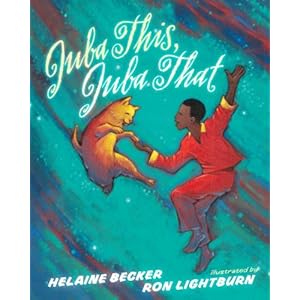
If I'd been judged by my skin color, I couldn't have written Juba This, Juba That, my hot-off-the-press picture book from Tundra Books, either. It's based on an African American slave chant. I'm not African-American, but I knew a good subject when I saw one. And I also knew no one else had ever written a picture book using this theme. For me, bringing the Juba chant alive for a new generation of kids of all colors trumped my own ethnicity. What a crime it would be if publishers had refused to publish this book, citing "cultural appropriation"  and my white skin as the reason!

I find the concept of cultural appropriation abhorrent. I understand that certain groups have been marginalized in history, and should be encouraged and assisted in telling their own stories. But that doesn't mean we should continue the crime of judging people by their race or gender, and preventing them from developing opportunities to create or to work because of those or any other personal characteristics. 

When people do that, they cease to be positioned on the left, where many fans of this philosophy seem to be situated. Instead they show themselves to be more in tune with the repressive philosophies of the totalitarianists and fascists on the far right.

Please read Juba This, Juba That  and judge it on its own merits - the calibre of the writing, the beauty of the art (expertly created by Ron Lightburn), and not on the color of my or Ron's skin. That would be what I call culturally appropriate.

Wednesday, July 27, 2011

Trouble in the Hills Coming Soon!

My previous post highlighted Juba This, Juba That, my upcoming picture book. I've got another book coming out this Fall too - something completely different. It's a Young Adult thriller:


Trouble in the Hills was my first venture into adventure (pardon the terrible wordplay; I'm incorrigible). I'm delighted by what  Christie Harkin, editor par excellence at Fitzhenry and Whiteside, has helped bring out in it! Our goal was riveting, edge-of-your-seat, page-turning, hold-your-breath, stay-up-til-2am storytelling.  I think we did it. The cover is awesome, anyway.

My current challenge is figuring out how to do an equally exciting trailer on a dollar-store budget. Anyone out there have some cool video of a helicopter shooting at kids running across a BC ranch? What about exploding ATVs? (And that's just the first chapter....)

Tuesday, July 26, 2011

The Roots of Juba This, Juba That in Black History

Is there anything more exciting than the arrival of a new book?


My advance copies of Juba This Juba That arrived last week. Ummmm...that new book smell......


The artwork by Ron Lightburn is fantastic, and double fun, the dust jacket reverses to a fabulous poster!
Here's my fave image from inside the book:


What's going on in this funhouse image, you may ask? To answer this question, we'll need to take a trip back in time - to Colonial America, to be exact.

The book originated in a family trip to Monticello, the home of Thomas Jefferson. There, the costumed staff were showing us how people lived in the 18th century. One staff member was grinding corn and singing a work chant. Its first verse went like this:


Juba This Juba That
Juba killed a yellow cat
Juba This Juba That
Juba Juba Juba Juba

I'm not big on killing cats, but the rhythm of the chant, stuck with me. I kept hearing it in my head throughout the rest of that holiday, and especially on the long drive back to Toronto. No wonder the slaves chanted it to make the work go easier - it was hard to think of anything else once those lines were lodged in your head.

Back at home, I decided to do a little research on the chant to see how I might adapt it for a children's book. Catchy rhythms, after all, are great hooks in picture books for younger readers.

My first research foray on the web was disappointing. The versions of the chant I came across were universally violent and gruesome, or just plain unappealing for children. Not exactly kid-friendly in our era! But there were verses, too, that incorporated opposites (high/low, here/there). Those, I thought, could be the basis for something more contemporary.

If I wanted to turn Juba into a picture book, then, I'd have to do some serious alteration to the verses, not just a tidying up. But could I, should I,  actually rewrite the verses? Part of me - the part that was a History Major at Duke - recoiled at the thought of altering historical texts. But the other, larger part of me thought that by doing so, the Juba chant could be revived for a new audience that would never hear it if the words remained unchanged. Can you imagine a jaunty kids' book making it to market if it talked of killing cats or cutting off a pigeon's wing?

Neither could I. So I got to work, writing new verses that were in keeping with the original ones, minus the ick factor.

But finger snappy verses do not a picture book make. I also dreamt up a  magical story line that involved a boy, a cat, and a night time visit to a carnival, to tie everything together.

My book was born. I hope it honors the spirit of the creators of the original Juba This, Juba That chant. And I hope you like it.

For more on the origins of the Juba chant, go to the excellent website http://www.voicesacrosstime.org/come-all-ye/ti/2004/lessons/03_3-5_Michalsky.htm. It also incorporates teaching lessons for grades 3-5 based on the chant.
Because: Science!